Business Name: BeeHive Homes of Hitchcock
Address: 6714 Delany Rd, Hitchcock, TX 77563
Phone: (409) 800-4233
BeeHive Homes of Hitchcock
For people who no longer want to live alone, but aren't ready for a Nursing Home, we provide an alternative. A big assisted living home with lots of room and lots of LOVE!
6714 Delany Rd, Hitchcock, TX 77563
Business Hours
Monday thru Saturday: Open 24 hours
Facebook: https://www.facebook.com/bhhohitchcock
Families searching for assisted living, memory care, or respite care normally start with the same question: where will my parent or spouse be understood, not handled? The answer often lies less in glossy sales brochures and amenities, and more in scale. The size of a house forms almost whatever that follows, from staff relationships to medical results, from day-to-day regimens to how quickly distress is noticed.
After two decades operating in and around senior care neighborhoods of many types, I have seen big and little operations prosper and stop working. Yet when the basics are done effectively, smaller, more intimate residences tend to deliver a various quality of elderly care, one that feels recognizably human. Not perfect, not utopian, but tailored, observant, and responsive in manner ins which sprawling facilities rarely sustain.
What "little" really indicates in senior care
Numbers vary by region and policy, however in practice a little assisted living house typically indicates between 6 and 40 locals, with many of the most intimate designs clustered in the 8 to 20 range. Some operate as licensed residential care homes within neighborhoods, others as boutique assisted living neighborhoods carved into wings or homes on a bigger campus.
By contrast, conventional assisted living facilities often house 80 to 150 locals, and some exceed 200, particularly when memory care and independent living are combined in one building. On paper, all might offer similar menus of support: medication management, help with bathing and dressing, meals, housekeeping, social activities, transportation, maybe a specialized memory care unit.
The lived experience, nevertheless, modifications considerably with scale. In a 12 bed home, the distance from a resident's room to the cooking area might be 10 actions. In a 120 bed structure, it can feel more like browsing a little airport. That physical scale filters into the psychological environment: how frequently a resident hears their own name, how quickly somebody notifications a limp, how quickly a member of the family can speak with the same caretaker twice in a row.
Why smaller neighborhoods observe more, sooner
The most constant benefit of small assisted living and memory care homes is early detection. Problems rarely get here with labels. They show up as subtle, fragmented signals: a plate left untouched, a series of brief nights, a typically neat resident in the other day's clothing. In a big building, these hints disperse among rotating staff and busy schedules. In a 10 or 20 bed setting, they accumulate in the mind of somebody who sees the same faces every day.
In among the tiniest homes I sought advice from for, personnel might tell who had actually slept poorly by listening to the timing of walkers relocating early morning. They did not require a chart to understand that Mrs. S had not pertain to breakfast two days in a row, or that Mr. P was more withdrawn this week. That familiarity is not emotional. It has medical effects. Changes in gait can foreshadow a fall. A pattern of skipped meals can show anxiety, oral discomfort, or the early phases of infection. In dementia care, increased pacing, fidgeting, or agitation can signal discomfort long before words fail.
Larger assisted living settings can discover these signals too, but it needs purposeful systems: official handoffs between shifts, disciplined usage of electronic health records, structured observation procedures. Those aid, yet they seldom replace the intuitive seeing that comes when the exact same two or 3 caretakers help the exact same group of residents every day over numerous months.
Staffing patterns and connection of relationships
Staffing is the skeleton of senior care. Policies, programs, and décor rest on it. Smaller sized homes, when managed well, develop a various daily rhythm in how caretakers, nurses, and locals interact.
In a typical little assisted living or memory care home, a resident may see the very same caretaker for morning care, meals, and much of the day's activities. Work still stretch, and not every service provider preserves ideal staffing ratios, but connection features the territory. When there are 12 locals, you do not require a scheduling algorithm to know who works with whom. Relationships progress naturally.
In bigger structures, shifts sprawl. One caretaker may be accountable for 10 to 15 locals or more, spread across long corridors and several floorings. Schedules turn to fill spaces, and firm staff or floaters are employed whenever ill calls or turnover spike. The net impact is that an older adult can be helped by 3 or four various individuals in one day, few of whom know their long history, little quirks, or subtle caution signs.
The continuity of relationships in smaller sized settings supports:
- More accurate understanding of each resident's baseline function, so staff recognize real modifications more quickly. Greater trust, that makes locals more happy to accept aid with delicate tasks like bathing, toileting, or medication. Better emotional guideline for citizens with dementia, who frequently react inadequately to unfamiliar faces and rushed interactions.
None of this gets rid of the need for training, supervision, and strong management. Small size can mask bad practice if owners rely exclusively on "family atmosphere" without medical rigor. Yet when both exist, the mix of little scale and professional standards becomes powerful.
Memory care in intimate environments
Dementia magnifies the results of environment. People with memory loss depend heavily on routine, sensory cues, and human connection when cognition flickers. The difference between a 16 resident memory care home and a 60 bed protected unit can be night and day.
In smaller memory care settings, noise levels are normally lower, visual fields less crowded, and wayfinding simpler. Homeowners learn the design more easily, even as their illness progresses. Fewer doors and shorter corridors decrease the likelihood of anxiety-inducing roaming. Personnel have an easier time monitoring without resorting quickly to restraints, bed alarms, or heavy sedation.
Families frequently report that their loved one "came back a little" after moving from a large, overstimulating environment into a smaller sized, calmer memory care home. In my experience, the enhancement is not strange. It reflects three particular features of human-scale memory care:
First, predictability of faces. With a stable staff of five or six caretakers throughout shifts, homeowners see the same people over and over. Even when names are gone, acknowledgment by feeling remains. That sense of familiarity reduces fear and resistance.
Second, customized activity. In a 12 person setting, personnel do not require a recreation department to arrange meaningful engagement. They can change in the minute: a quiet card video game at the table, folding linens for those who miss out on homemaking, humming hymns during an uneasy night. Shows is less about scheduled occasions and more about continuous micro-engagement woven into daily routines.
Third, quick de-escalation. When only a handful of people occupy a common room, increasing agitation in one resident is simpler to spot and attend to. Staff can reroute with a walk, offer a snack, or shift the environment quickly. In large units, by the time agitation is discovered, it may have spread to several citizens, requiring personnel into reactive, in some cases restraining, responses.
Smaller does not immediately suggest gentler. There are inadequately run little homes that utilize television as a sitter and understaff vital overnight hours. Families still require to ask careful concerns. However small memory care settings, when well led, align much better with what dementia actually requires: a steady, understandable, sensory-safe world.
Assisted living that still feels like living
People do stagnate to assisted living to receive services in the abstract. They transfer to protect as much regular life as possible while getting assist with what has become too tough or risky at home. Scale deeply influences how "regular" that life feels.
In large facilities, hotel and healthcare facility design affects dominate: large corridors, central dining-room that seat dozens, broad activity calendars, and back-of-house service areas. There is a logic to this, especially for buildings serving more than a hundred people. Food service need to run at volume. Housekeeping follows paths. Activities directors schedule programs to interest broad audiences.
Small homes invert that model. In a number of the best, the cooking area is actually part of the home. Residents can smell breakfast cooking. They see somebody slicing vegetables for soup. Spontaneous discussion occurs due to the fact that the location feels less like an institution and more like a shared home. The size itself invites involvement: setting tables, washing meals, watering plants on the porch.
This home-like scale translates into fresher observation as well. When everyone consumes in two or three little tables, it is obvious who seems short on energy, who stops mid meal, who is unexpectedly brief of breath. Personnel do not require to scan a dining-room of eighty individuals to observe a pattern.
For older grownups who never imagined themselves in "a center," these details matter. Being able to knock on the administrator's office door, or simply speak with them across the kitchen counter, allows concerns to be raised and dealt with in genuine time. Decision making is closer to the cutting edge. Policies can be adapted to a specific scenario without awaiting approval from a remote business office.
Respite care as a screening ground
Short term respite care placements use a revealing window into the effects of scale. Households who offer day-to-day care in your home frequently reach a point where they require short-lived relief: a week during surgery healing, two weeks to manage caregiver burnout, or a few days to participate in an out-of-town occasion. They may put their loved one briefly in an assisted living or memory care setting.
In big operations, respite stays can feel institutional, a resident temporarily inserted into an existing maker. Staff do their finest, however by the time routines are established, the stay is almost over. Families get limited insight into how the community may support their loved one long term, because the visitor remains somewhat peripheral.
In smaller homes, respite care tends to incorporate more quickly. With fewer locals and less personnel handoffs, the beginner is seen and welcomed (or a minimum of consistently acknowledged) by everyone within a day or two. Caretakers discover choices rapidly: how someone takes their coffee, which t-shirt comes first in the morning, what music soothes them. That speed of familiarity matters both for the comfort of the older grownup and for the self-confidence of the family.
Respite can also expose weak points. If a little home runs with margin-thin staffing and bad structure, the pressure of accommodating a beginner exposes it rapidly. Families need to view how personnel interact about the stay, how typically they get updates without triggering, and whether the leadership shows reasonable understanding of the individual's needs.

Medical oversight and clinical complexity
Critics of little senior care settings often argue that larger facilities provide more powerful medical oversight. They keep in mind the existence of on site nurses, often 24 hr a day, ties with local physicians, and access to rehabilitation services. The concern is that smaller operations, especially residential care homes, may lack medical sophistication for residents with complicated conditions.
There is some fact here. Larger, well run assisted living communities typically have nurses on task or on call around the clock, along with relationships with going to medical care service providers and therapists. Some incorporate telehealth or on site centers, especially for homeowners with several chronic illnesses.
Smaller residences normally operate with fewer licensed staff, relying heavily on caregivers and medication aides, with nurses offered part-time, on call, or through contracted firms. That does not naturally indicate worse care. It does, however, require clear boundaries about who they can securely serve. A 12 bed home with one nurse specialist checking out two times a week is not an appropriate setting for somebody who requires day-to-day complex wound care, frequent IV infusions, or continuous oxygen adjustments.
Where little settings stand out medically is in application. Medication changes, brand-new diet plan orders, or early indications of delirium are incorporated into life faster due to the fact that all staff know each resident thoroughly. The nurse or physician may visit less typically, however their orders travel quicker through the grapevine of direct care.
For families, the key is positioning in between requirement and capability. Ask specific, concrete concerns about how the home manages:
- Sudden modifications in condition, such as confusion, fever, or falls. Hospital transfers and transitions back from severe care. Progressive movement decline and the intro of wheelchairs or lifts. End of life care, including coordination with hospice.
The responses will differ by size and by management approach. A small home that says honestly, "We can manage this now, however if your father requires 2 person transfers regularly, we will not be safe," is more secure in practice than a large facility that assures you, slightly, that "We manage whatever."
Family involvement and transparency
Smaller assisted living and memory care homes tend to invite a different design of family participation. In big buildings, household contact typically moves through official channels: arranged care conferences, voicemail trees, electronic websites, and client service desks. Those structures can help when dozens of households need information, but they likewise develop distance.
Human-scale homes, by contrast, normally depend on direct, personal communication. A child dropping in may stroll through the cooking area, greet the caregiver who assisted her senior care BeeHive Homes of Hitchcock mother shower that early morning, and get an unvarnished upgrade that consists of both positives and concerns. Issues are harder to bury. If there was a challenging night, someone mentions it. If a resident has been extra lonely, families hear it in plain language instead of through generalized survey comments.
This openness is not just nostalgic goodwill. It works as a casual quality control system. Households who feel consisted of in life are more likely to notice early signs of neglect, burnout, or overreach. They likewise end up being allies in reinforcing routines that support the resident, from hydration goals to sleep hygiene.
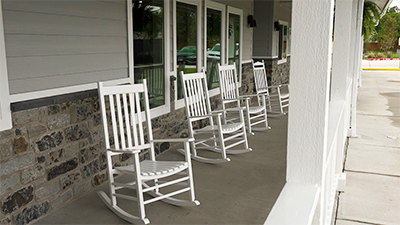
There is a trade off. Smaller sized houses in some cases lack sleek interaction facilities. You may not get shiny month-to-month newsletters or app-based occasion updates. Instead, you might get a text and a quick call. For some households, that feels disorganized. For others, it feels sincere and immediate.
Costs, sustainability, and trade offs
The monetary image is more complex than marketing recommends. Each month, smaller assisted living and memory care homes can be more pricey than mid tier large facilities, specifically in metropolitan areas where realty is expensive. The everyday rate for an intimate, 10 bed memory care house with high staffing and fresh cooking might outstrip that of a bigger, more standardized building.
However, costs must be weighed against what is consisted of. Some large neighborhoods advertise lower base rents, then layer on substantial care level charges that escalate rapidly as needs increase. Smaller homes typically bundle more services into a single daily rate, which can make budgeting more predictable even if the leading line number is higher.
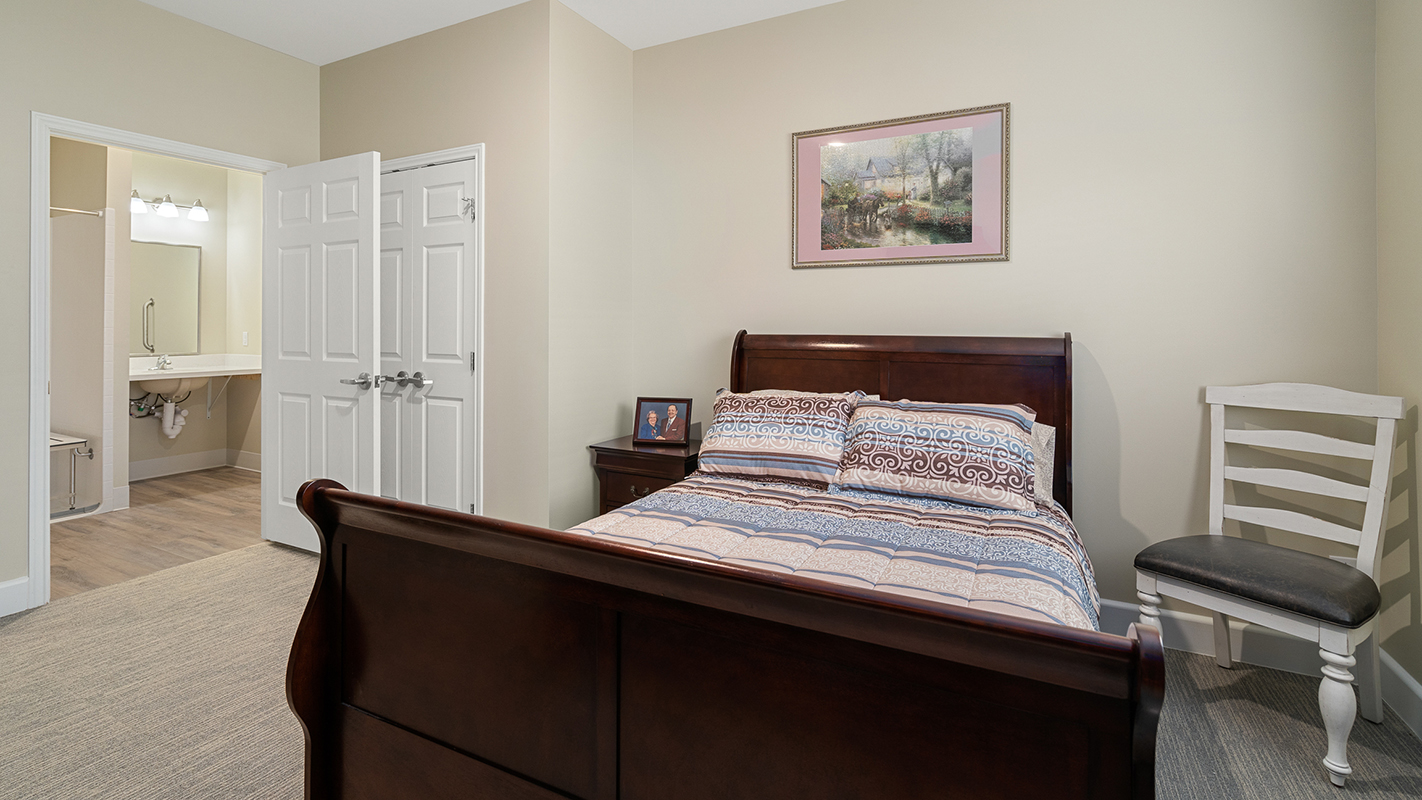
Sustainability also matters. A beautifully run little home depends greatly on its leadership. If the starting owner retires or offers to a less engaged operator, culture can alter rapidly. Large operators bring more organizational redundancy, though they also deal with pressures to maintain consistent margins across lots of sites.
Families ought to believe in terms of danger tolerance. Little, high quality residences offer abundant, relational care however might be more susceptible to ownership changes or market shocks. Large centers provide more institutional stability however can feel impersonal and may have a hard time to adjust flexibly to individual needs.
When larger settings may be the better fit
Despite the numerous advantages of human-scale care, bigger assisted living or senior care schools are in some cases the smarter choice. Certain circumstances require the resources that just volume can sustain.
Individuals with extremely complex medical requirements might take advantage of on site nursing 24 hours a day, distance to rehab facilities, and incorporated care teams that coordinate throughout numerous specializeds. Older grownups who are deeply social, take pleasure in a jam-packed calendar, and prosper in bustling environments may find little homes too quiet or limiting. Couples with various requirements in some cases choose large schools that use independent living, assisted living, memory care, and competent nursing in one place, permitting them to live near each other regardless of divergent levels of support.
Geography also matters. In some regions, small homes are uncommon, inadequately regulated, or uneven in quality. A well operated 120 bed assisted coping with strong oversight, clear staffing standards, and transparent reporting might offer much safer, more constant care than an undercapitalized 8 bed house run largely by untrained staff.
The point is not that small is always much better. Rather, scale is a vital, often under analyzed factor that forms what "much better" suggests for a particular individual in a specific season of life.
How to examine a little home in practice
When visiting a prospective assisted living, memory care, or respite care home, families often bring mental checklists about tidiness, menus, and activity calendars. Those matter, however for little homes, pay specific attention to less obvious indications of human-scale functioning.
Observe how staff speak with residents, not simply in the tour space but in corridors and throughout routine care. Listen for using names, mild triggering, and natural conversation. Enjoy whether locals appear to know each other, and whether staff can sum up everyone's story in plain, particular language instead of generic expressions like "She's sweet" or "He's independent."
Notice the texture of the day. Are individuals gathered just around a television, or do you see small pockets of engagement, even if informal? Inspect whether call bells or demands get prompt actions, especially when no administrator exists. Ask direct questions about staffing ratios on nights and weekends, about turnover, and about how typically leadership is physically present in the building.
Finally, trust the quiet, cumulative impressions of your visits. A human-scale home that provides strong senior care will usually feel coherent. The faces you fulfill, the regimens you observe, the method issues are explained and dealt with will line up. You will not hear excellence, however you should hear grounded, specific, and constant answers.
The core advantage: care at the speed of relationship
At its finest, elderly care is not a series of tasks but a web of relationships: between resident and caretaker, household and staff, nurse and doctor, cook and neighborhood. Smaller assisted living and memory care houses do not instantly guarantee empathy or proficiency. They do, however, set the stage for care to unfold at the speed of relationship instead of at the speed of process.
In human-scale environments, people acknowledge each other. Patterns emerge quickly. Modifications happen in genuine time. There is less space to hide systemic issues behind layers of policy, and more opportunity for individual strengths to shine. When an older adult's world has actually already narrowed through frailty or dementia, that sort of attentive, relational care can make the difference in between simply being housed and in fact being cared for.
Families navigating the labyrinth of senior care choices deal with hard trade offs. Scale is only one factor, but it is a fundamental one. Understanding how size shapes every day life helps you read beyond the pamphlets, ask sharper questions, and choose a setting, big or little, where your loved one can live not as an unit of occupancy, but as an individual amongst people.
BeeHive Homes of Hitchcock offers assisted living services
BeeHive Homes of Hitchcock provides memory care services
BeeHive Homes of Hitchcock offers respite care services
BeeHive Homes of Hitchcock provides 24-hour caregiver support
BeeHive Homes of Hitchcock features a small, residential home setting
BeeHive Homes of Hitchcock includes private bedrooms for residents
BeeHive Homes of Hitchcock includes private or semi-private bathrooms
BeeHive Homes of Hitchcock provides medication management and monitoring
BeeHive Homes of Hitchcock serves home-cooked meals prepared daily
BeeHive Homes of Hitchcock accommodates special dietary needs
BeeHive Homes of Hitchcock provides housekeeping services
BeeHive Homes of Hitchcock provides laundry services
BeeHive Homes of Hitchcock offers life enrichment and social activities
BeeHive Homes of Hitchcock supports activities of daily living assistance
BeeHive Homes of Hitchcock promotes a safe and supportive environment
BeeHive Homes of Hitchcock focuses on individualized resident care plans
BeeHive Homes of Hitchcock encourages strong relationships between residents and caregivers
BeeHive Homes of Hitchcock supports aging in place as care needs change
BeeHive Homes of Hitchcock provides a calm and structured environment for memory care residents
BeeHive Homes of Hitchcock delivers compassionate senior and elderly care
BeeHive Homes of Hitchcock has a phone number of (409) 800-4233
BeeHive Homes of Hitchcock has an address of 6714 Delany Rd, Hitchcock, TX 77563
BeeHive Homes of Hitchcock has a website https://beehivehomes.com/locations/Hitchcock/
BeeHive Homes of Hitchcock has Google Maps listing https://maps.app.goo.gl/aMD37ktwXEruaea27
BeeHive Homes of Hitchcock has Facebook page https://www.facebook.com/bhhohitchcock
BeeHive Homes of Hitchcock won Top Assisted Living Homes 2025
BeeHive Homes of Hitchcock earned Best Customer Service Award 2024
BeeHive Homes of Hitchcock placed 1st for Senior Living Communities 2025
People Also Ask about BeeHive Homes of Hitchcock
What is BeeHive Homes of Hitchcock monthly room rate?
The rate depends on the level of care that is needed. We do an initial evaluation for each potential resident to determine the level of care needed. The monthly rate is based on this evaluation. There are no hidden costs or fees
Can residents stay in BeeHive Homes of Hitchcock until the end of their life?
Usually yes. There are exceptions, such as when there are safety issues with the resident, or they need 24 hour skilled nursing services
Does BeeHive Homes of Hitchcock have a nurse on staff?
Yes, we have a nurse on staff at the BeeHive Homes of Hitchcock
What are BeeHive Homes of Hitchcock's visiting hours?
Visiting hours are adjusted to accommodate the families and the resident’s needs… just not too early or too late
Do we have couple’s rooms available at BeeHive Homes of Hitchcock?
Yes, each home has rooms designed to accommodate couples. Please ask about the availability of these rooms
Where is BeeHive Homes of Hitchcock located?
BeeHive Homes of Hitchcock is conveniently located at 6714 Delany Rd, Hitchcock, TX 77563. You can easily find directions on Google Maps or call at (409) 800-4233 Monday through Sunday Open 24 hours
How can I contact BeeHive Homes of Hitchcock?
You can contact BeeHive Homes of Hitchcock by phone at: (409) 800-4233, visit their website at https://beehivehomes.com/locations/Hitchcock, or connect on social media via Facebook
Residents may take a trip to the Texas City Museum which provides a quiet cultural outing for seniors in assisted living or memory care, supporting meaningful senior care and respite care experiences.